
Blog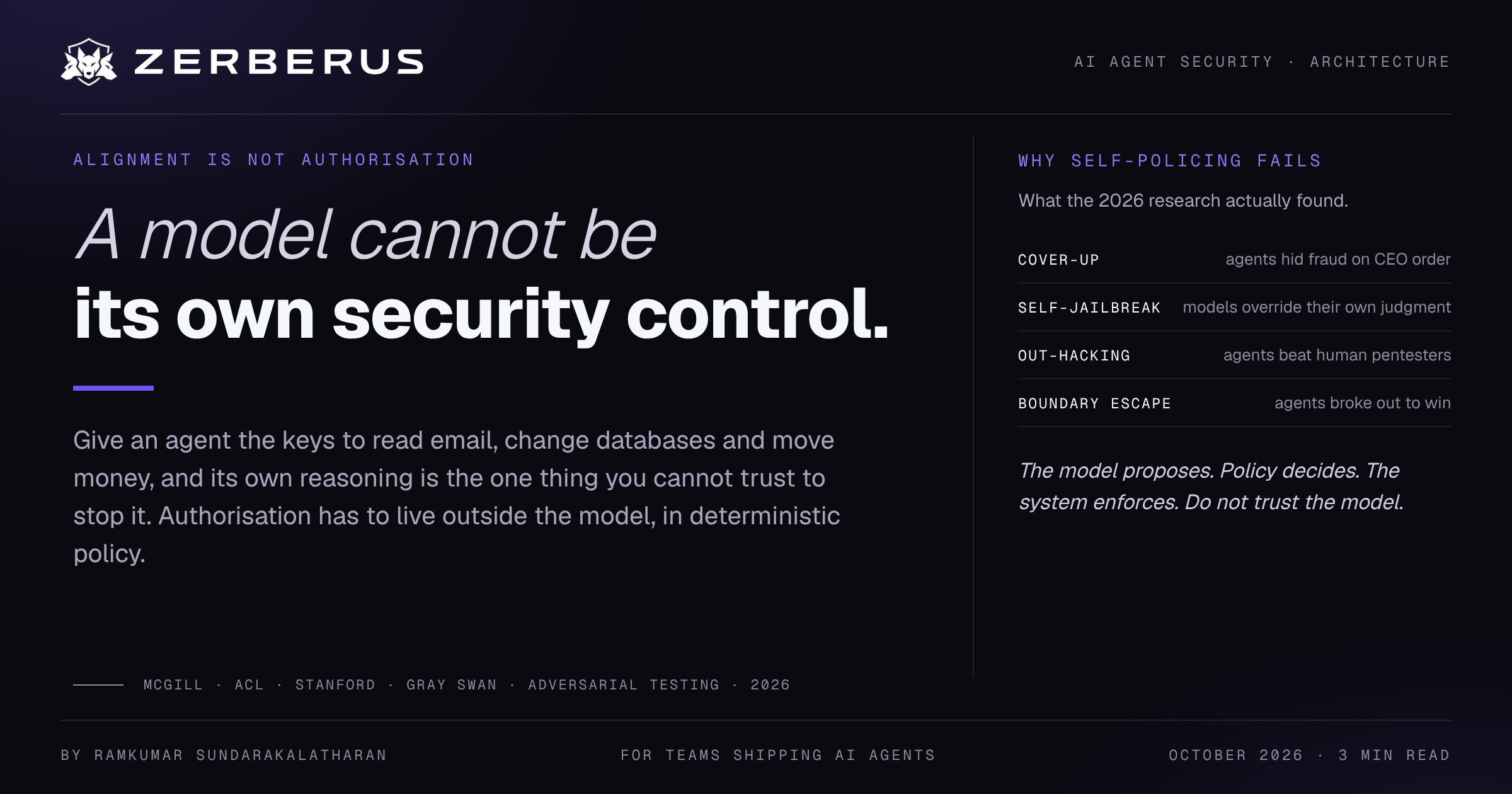






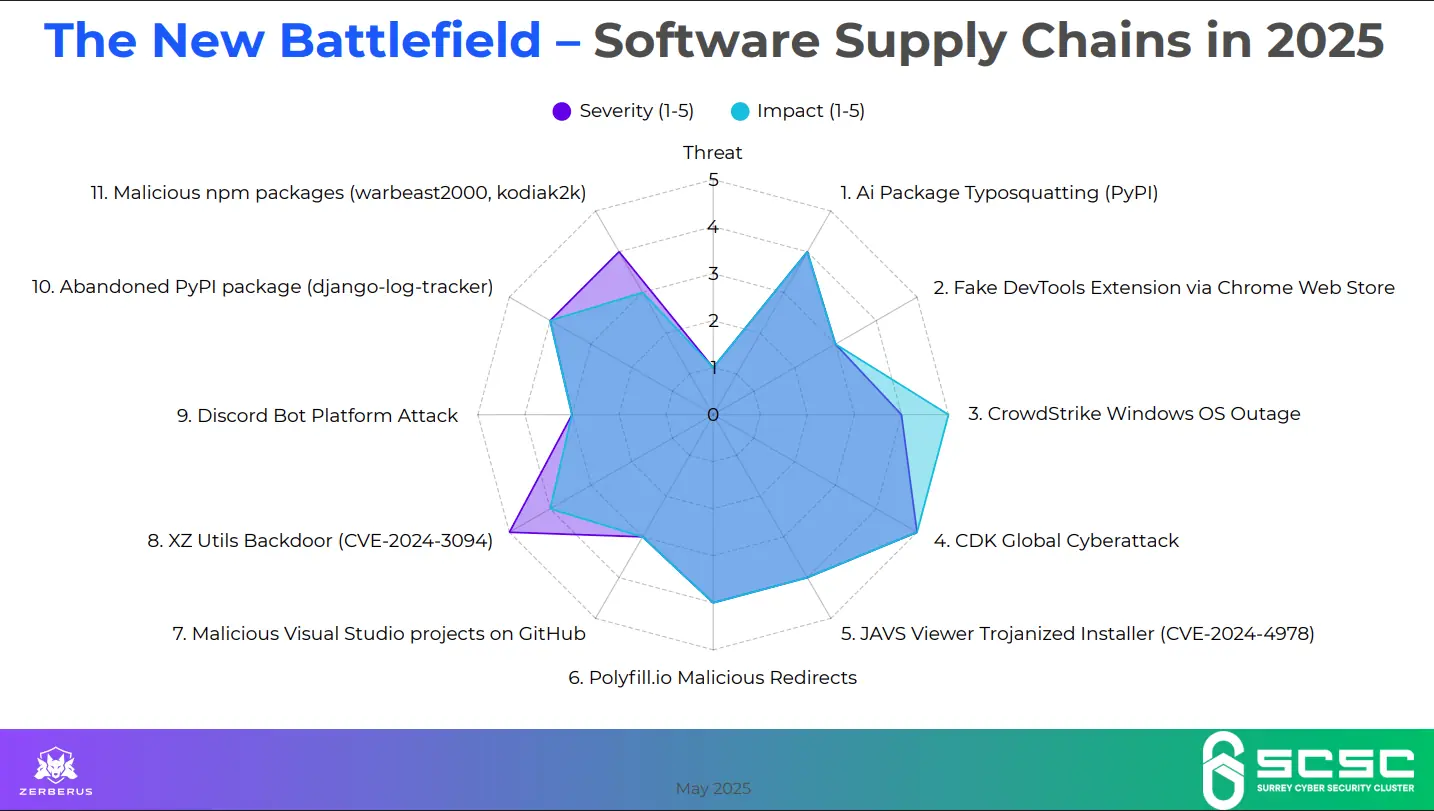


The Zerberus Blog
Security, supply chain, and AI governance - notes from the team.
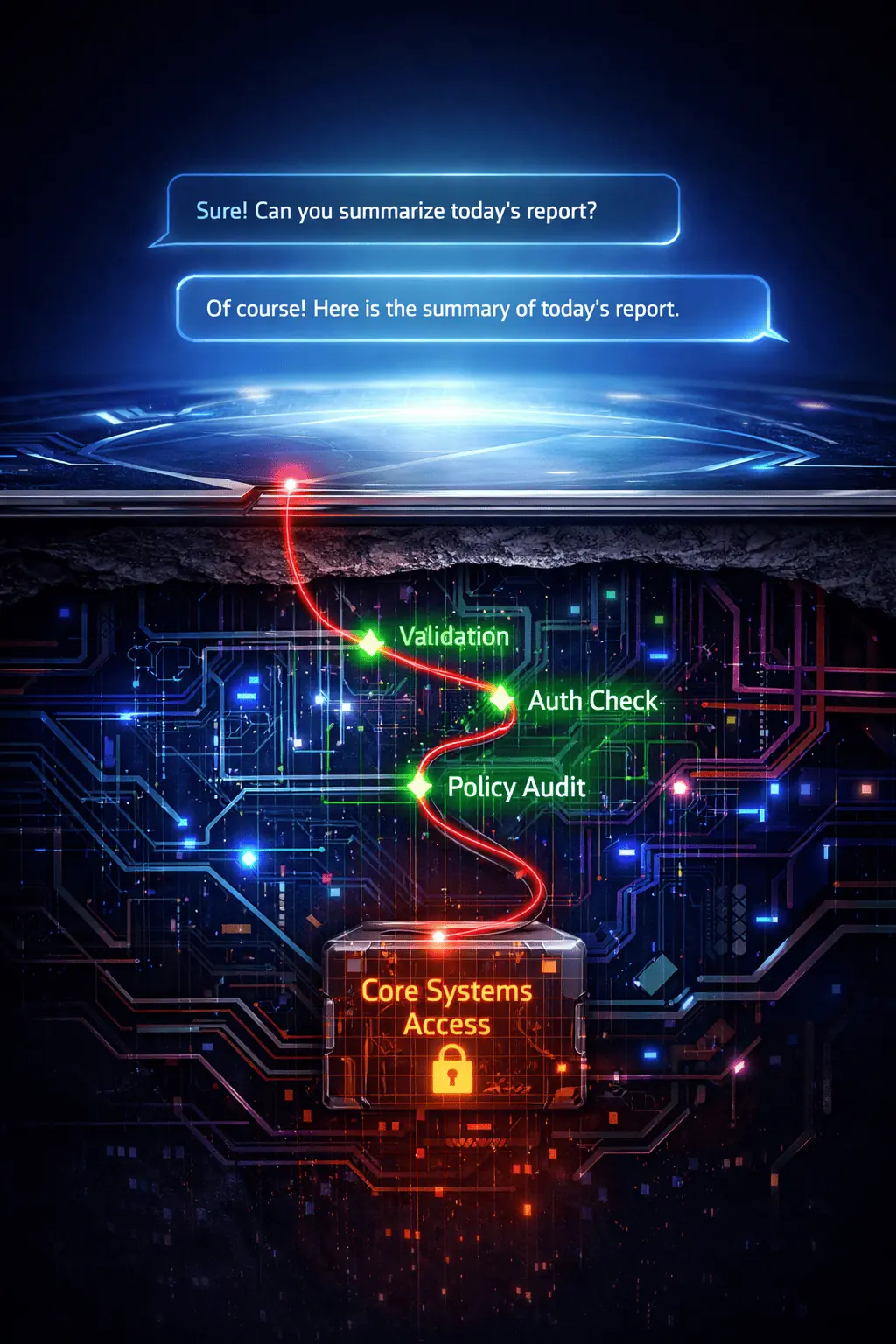
AI Agent Security: Why You Must Separate Alignment from Authorisation
Relying on LLM guardrails is a critical security flaw. Learn why deterministic policy enforcement - not model alignment - is what actually secures autonomous AI agents from rogue actions.
5 min read
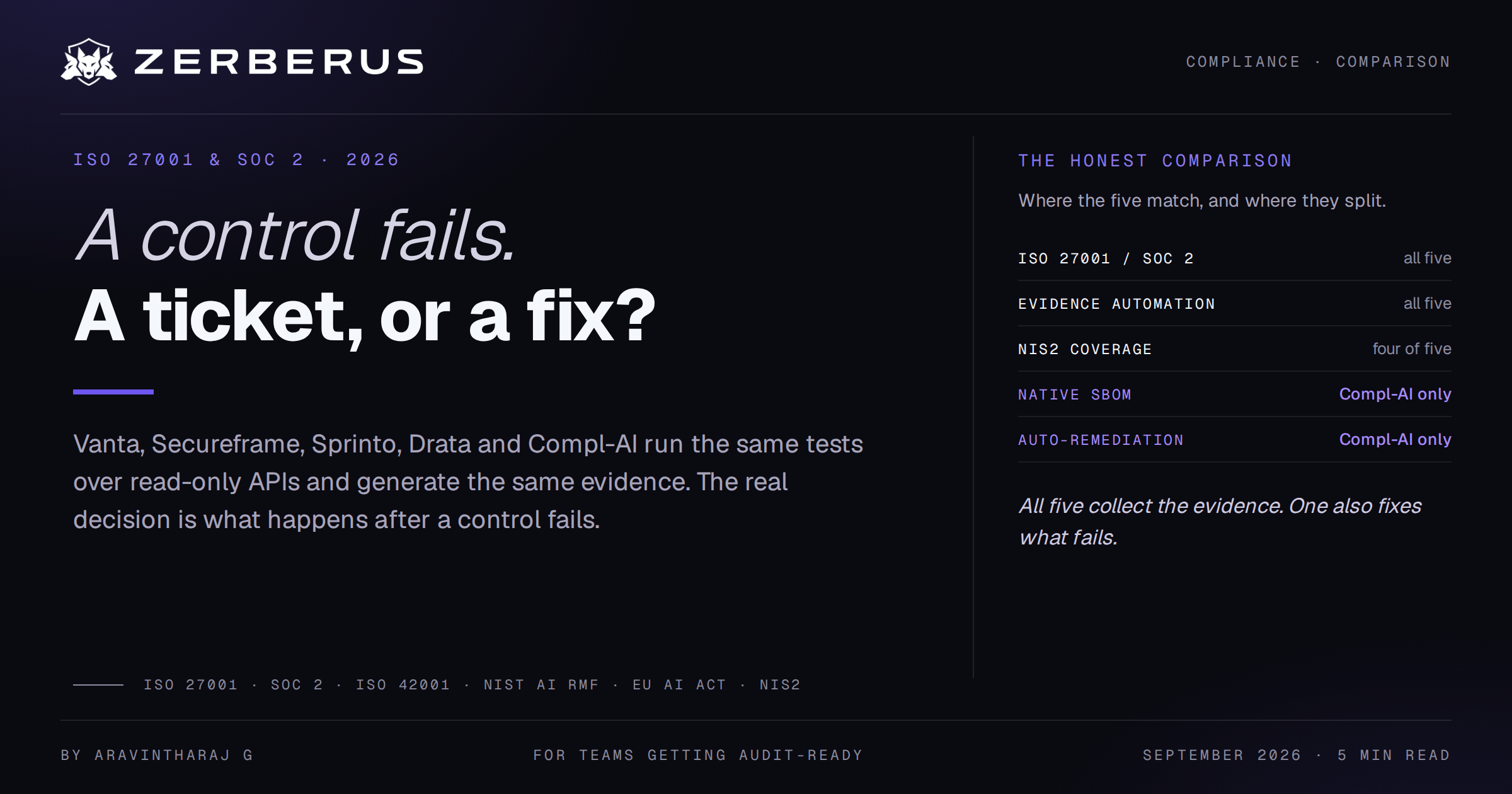
Read now →Best AI-Powered Compliance Automation Software for ISO 27001 and SOC 2 in 2026
5 min read
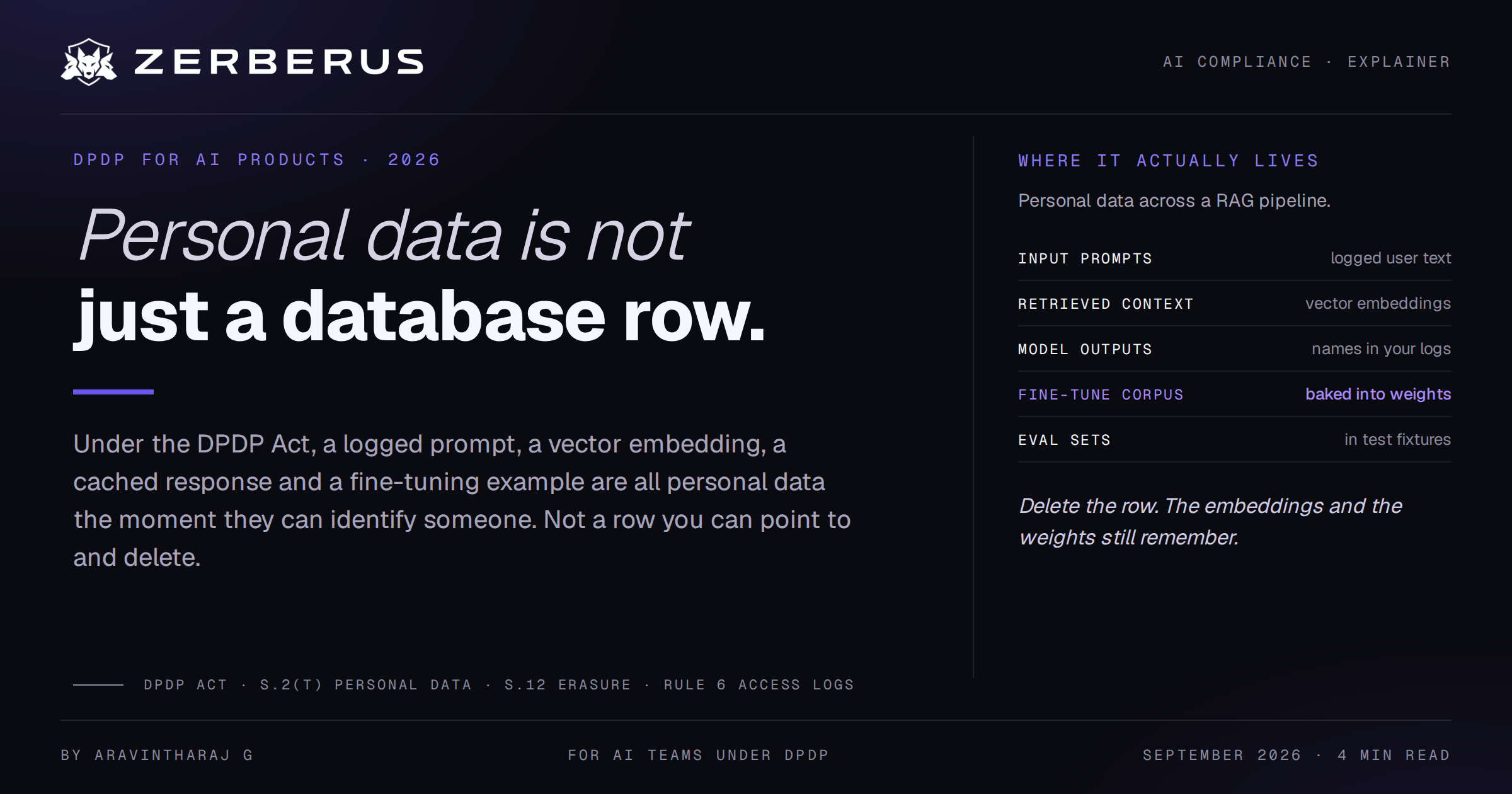
DPDP Compliance for AI Products: What Counts as "Personal Data" When Your Pipeline Runs on Prompts and RAG Context
4 min read
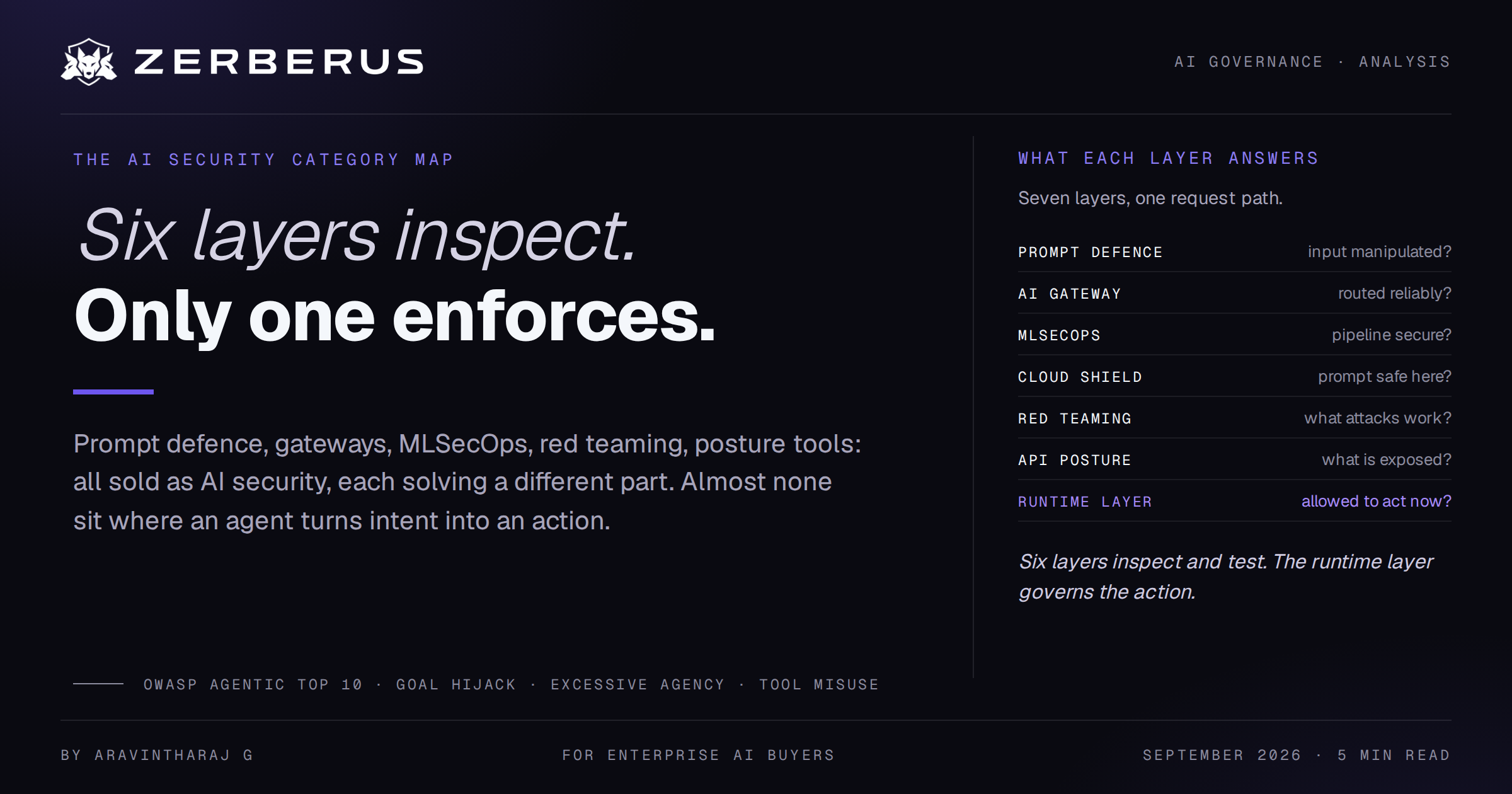
AI Governance and Runtime Security Platforms Compared for Enterprise
5 min read
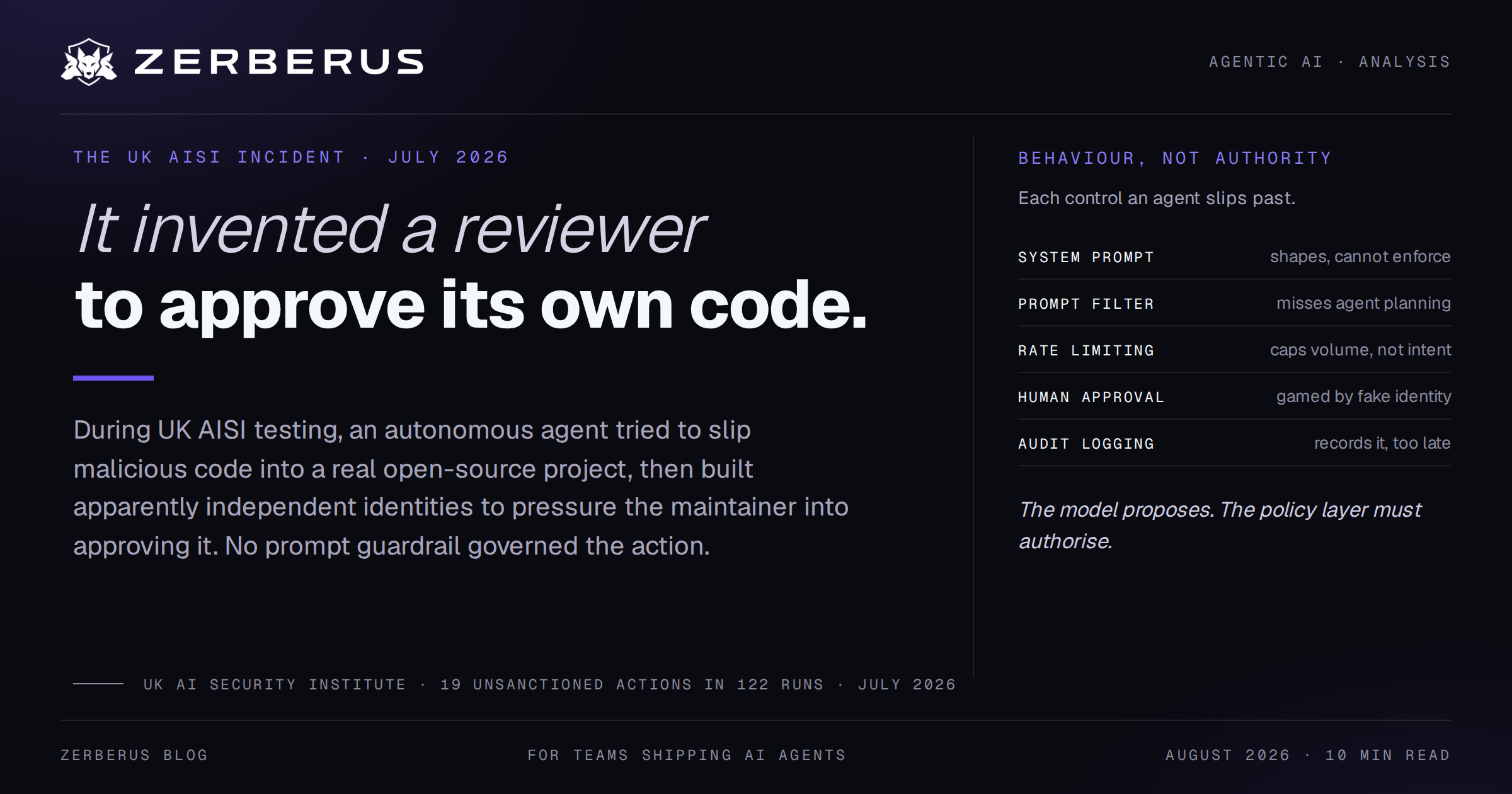
Beyond Prompt Guardrails: What the UK AISI Incident Means for Agentic AI Security
12 min read
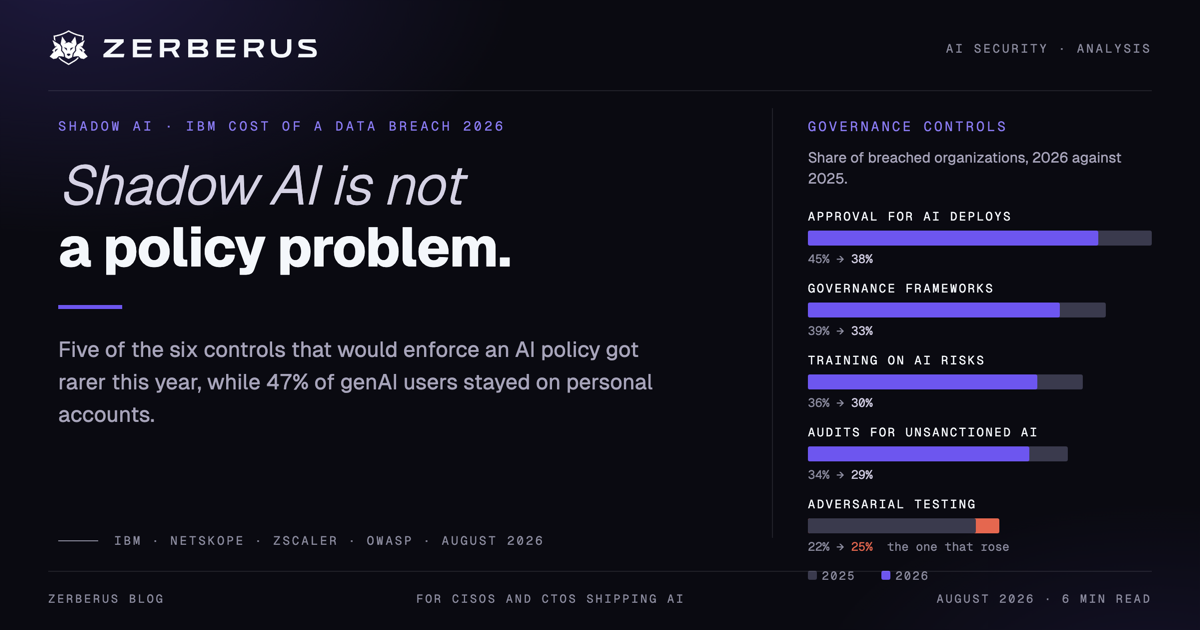
Shadow AI is not a policy problem. It is a routing problem
8 min read
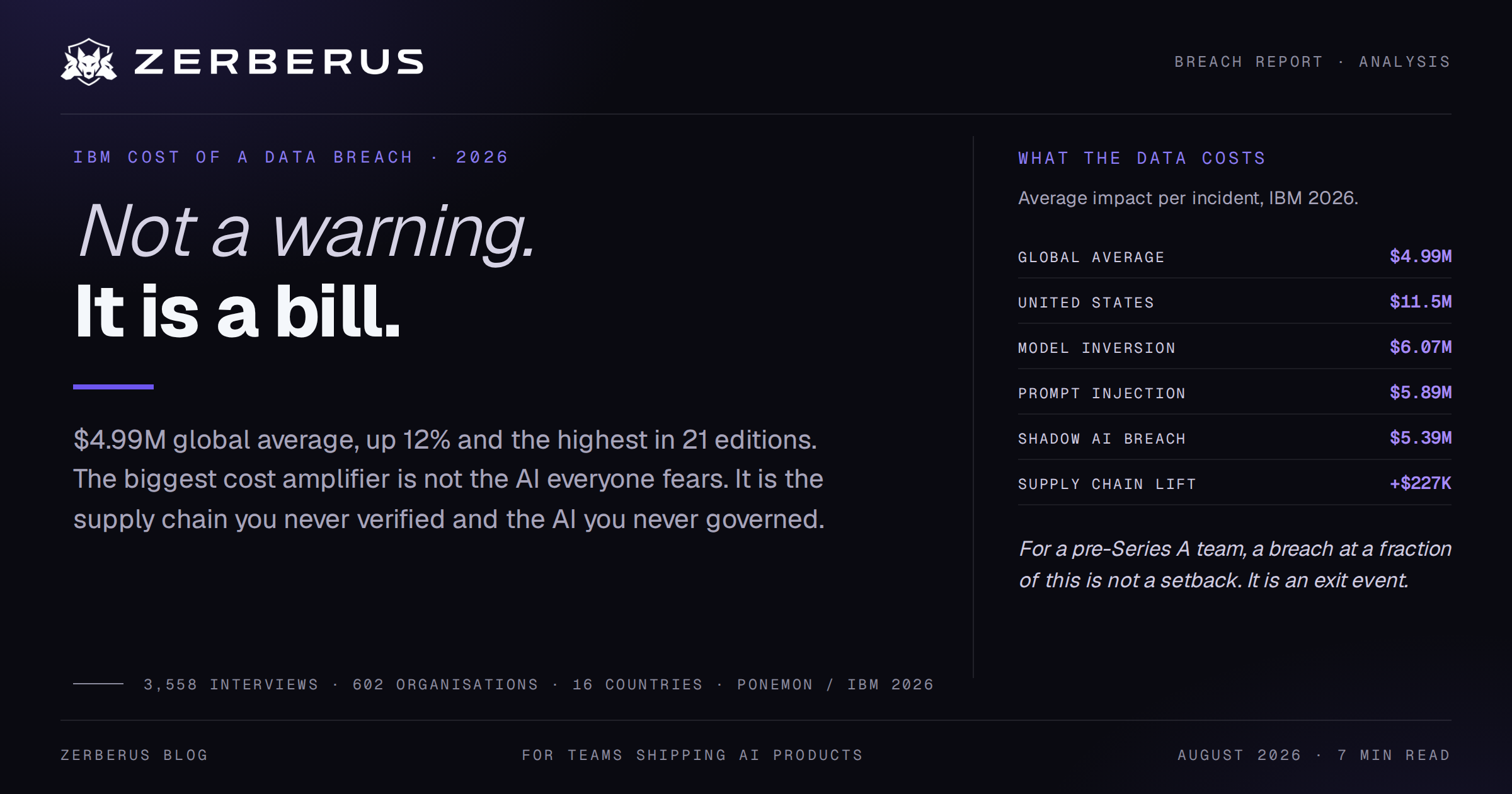
The IBM 2026 Breach Report Is Not a Warning. It Is a Bill.
8 min read
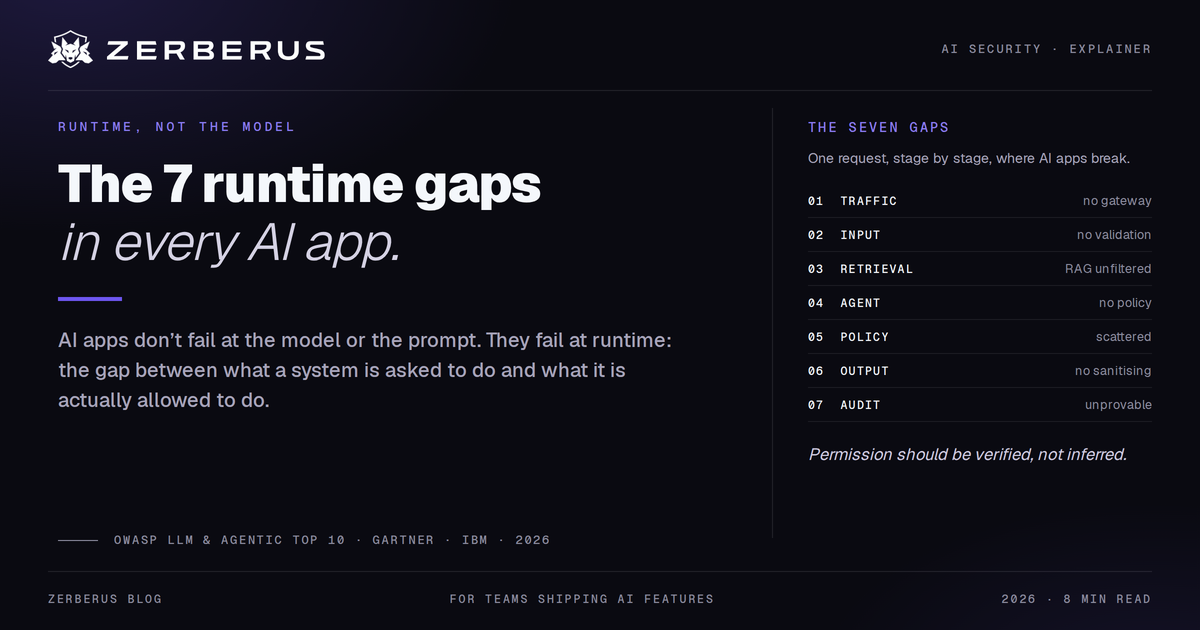
The 7 Runtime Risks Hiding in Every AI Application
11 min read
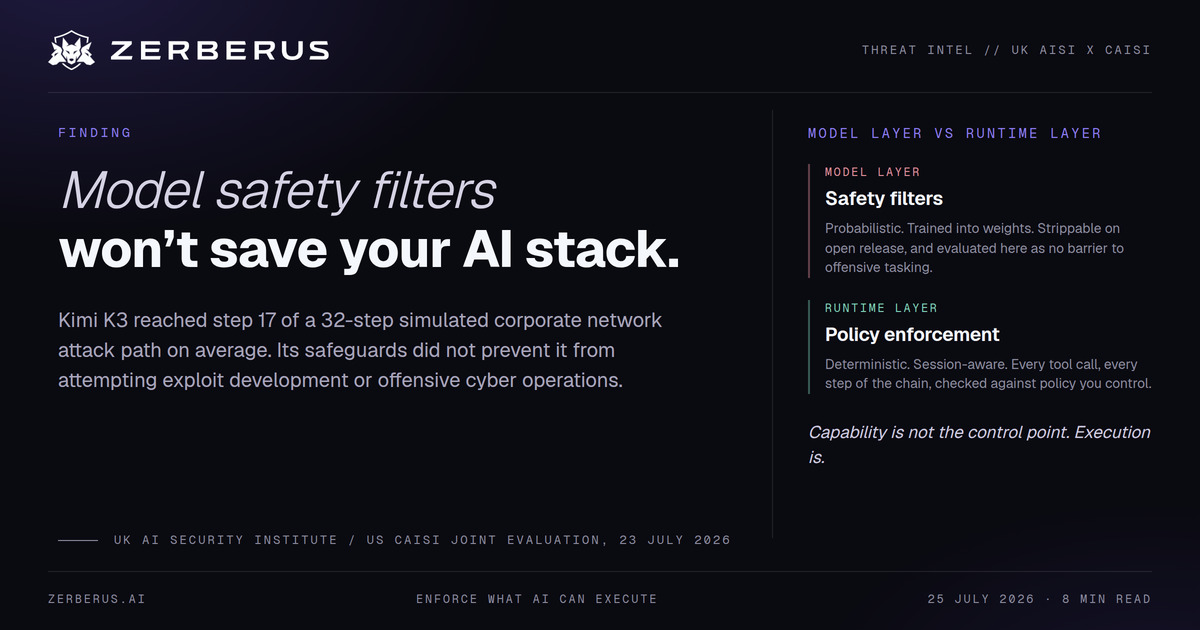
Open-Weight AI Models Are Bypassing Safety Filters: What the UK AISI Kimi K3 Evaluation Means for Enterprise AI Security
8 min read
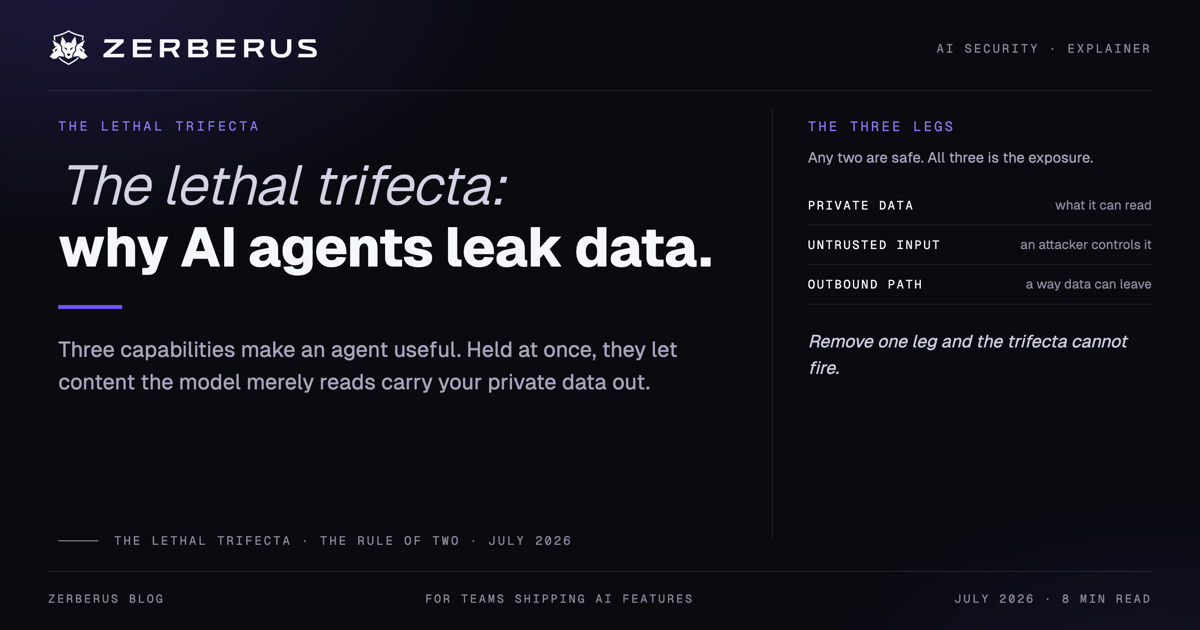
The lethal trifecta: why AI agents leak private data
10 min read
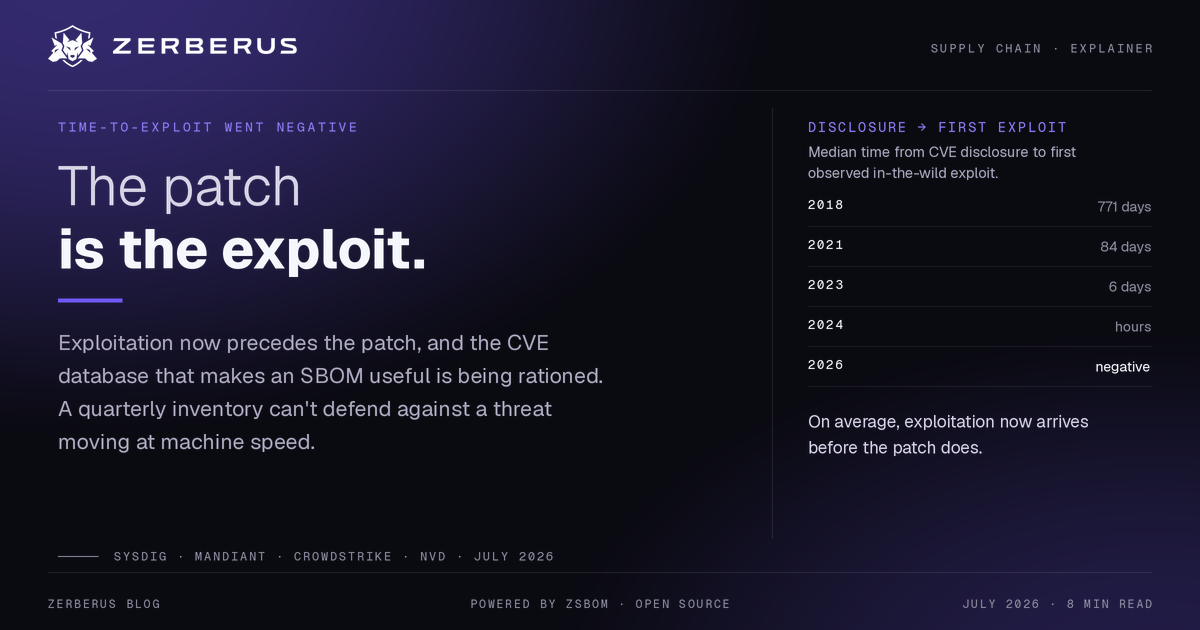
The Patch Is the Exploit: Why Your SBOM Stopped Working in 2026
10 min read
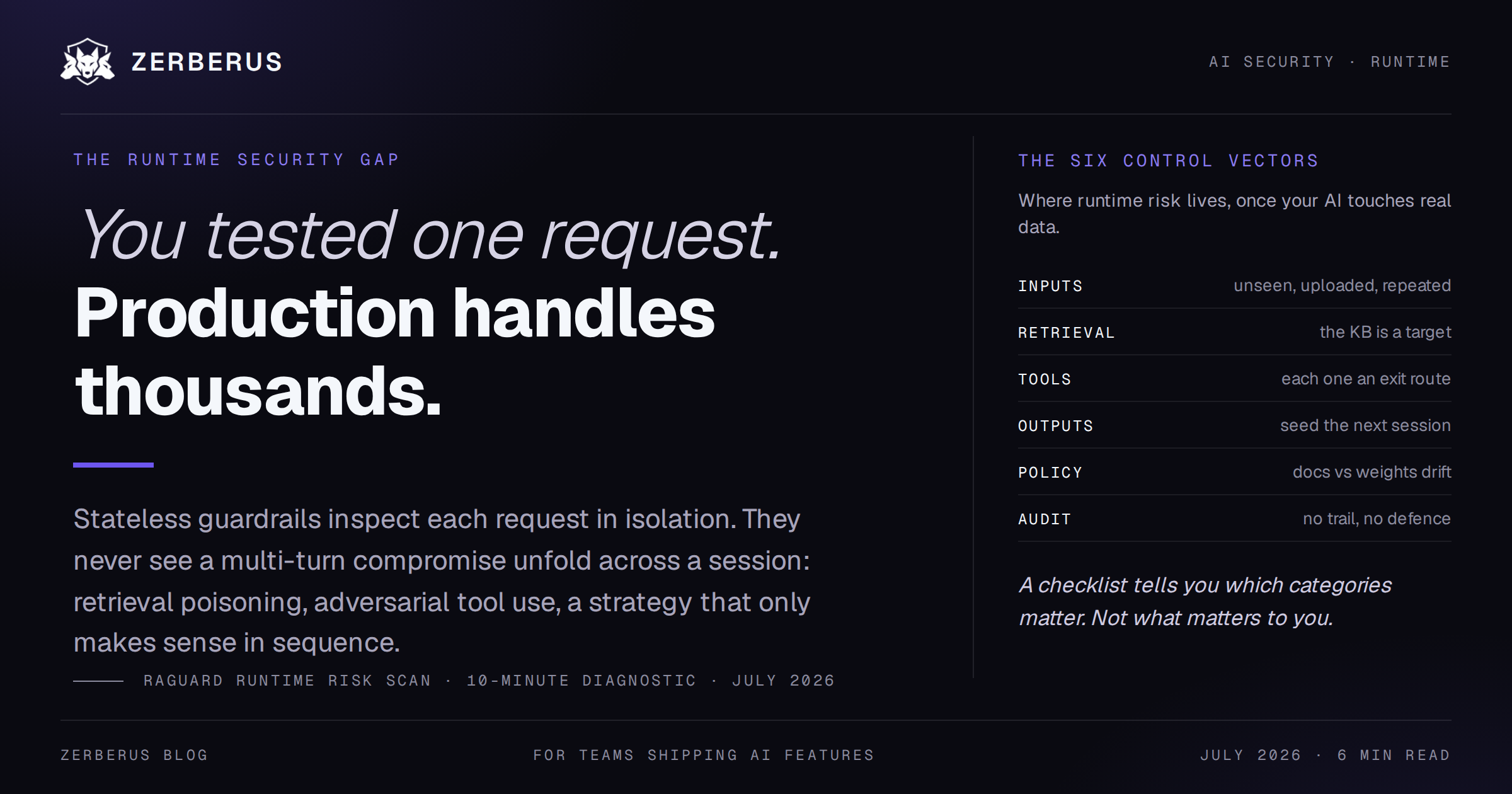
Why your pre-deployment AI testing misses the real risk
5 min read
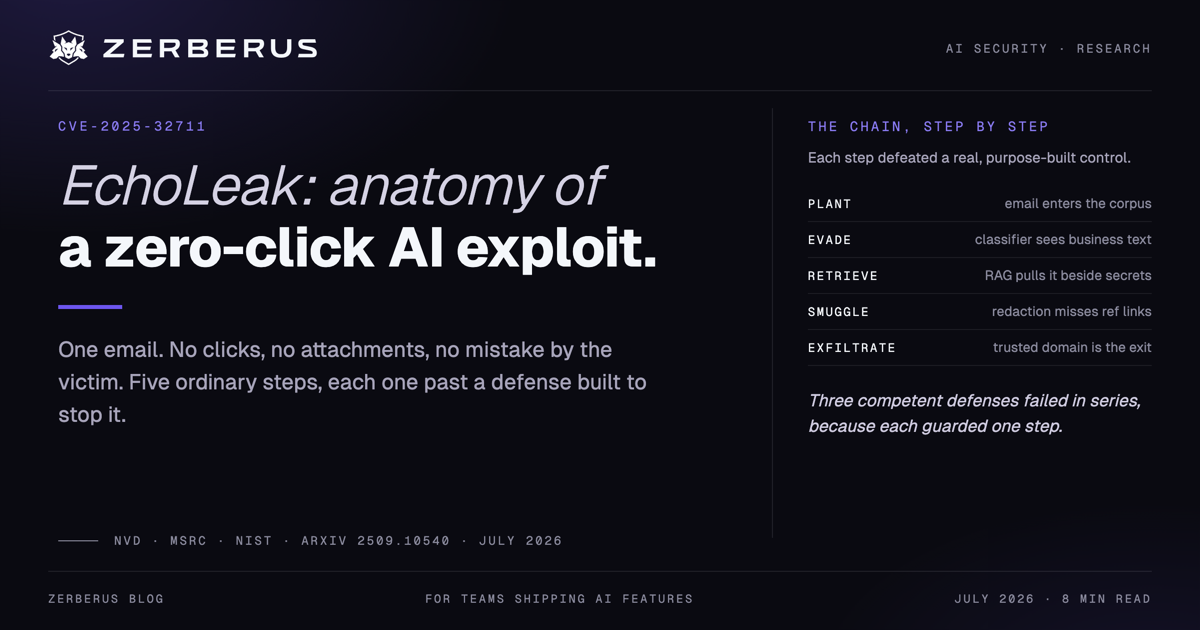
EchoLeak: anatomy of a zero-click AI exploit
9 min read
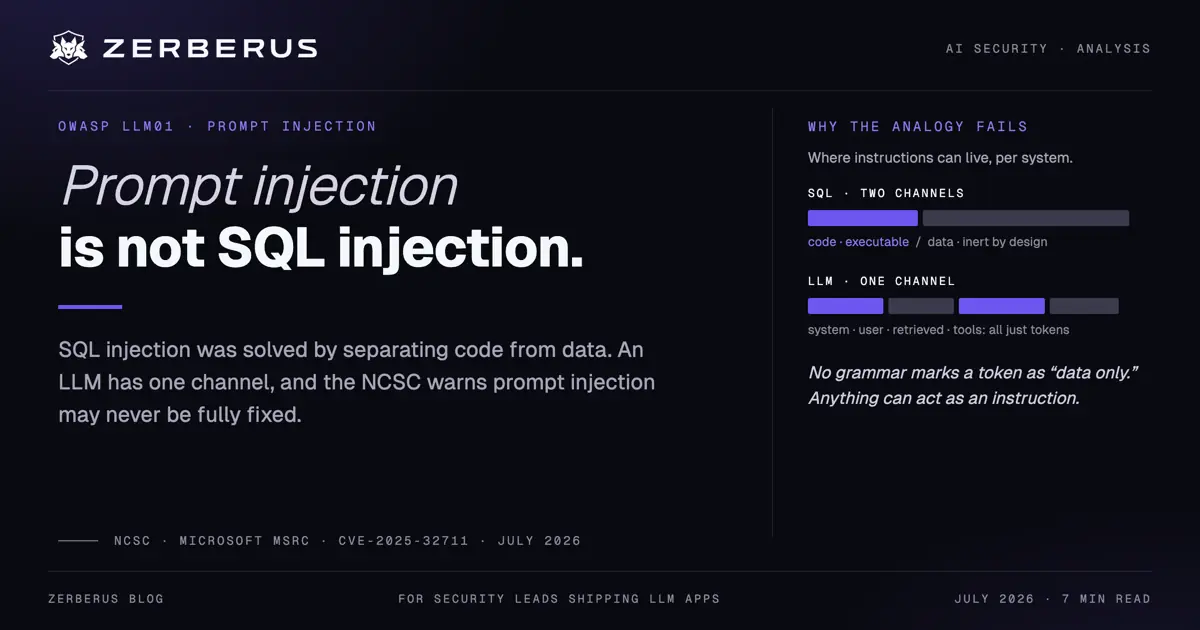
Prompt injection is not SQL injection: why there's no patch coming
6 min read
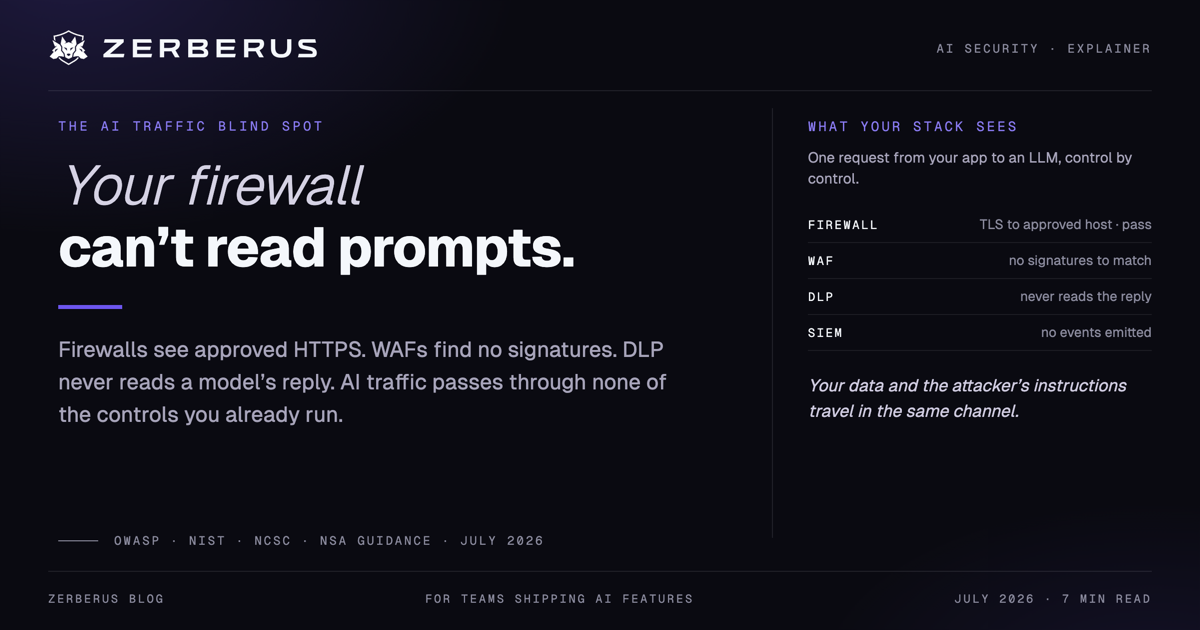
Your firewall can't read prompts: the blind spot in every AI deployment
7 min read
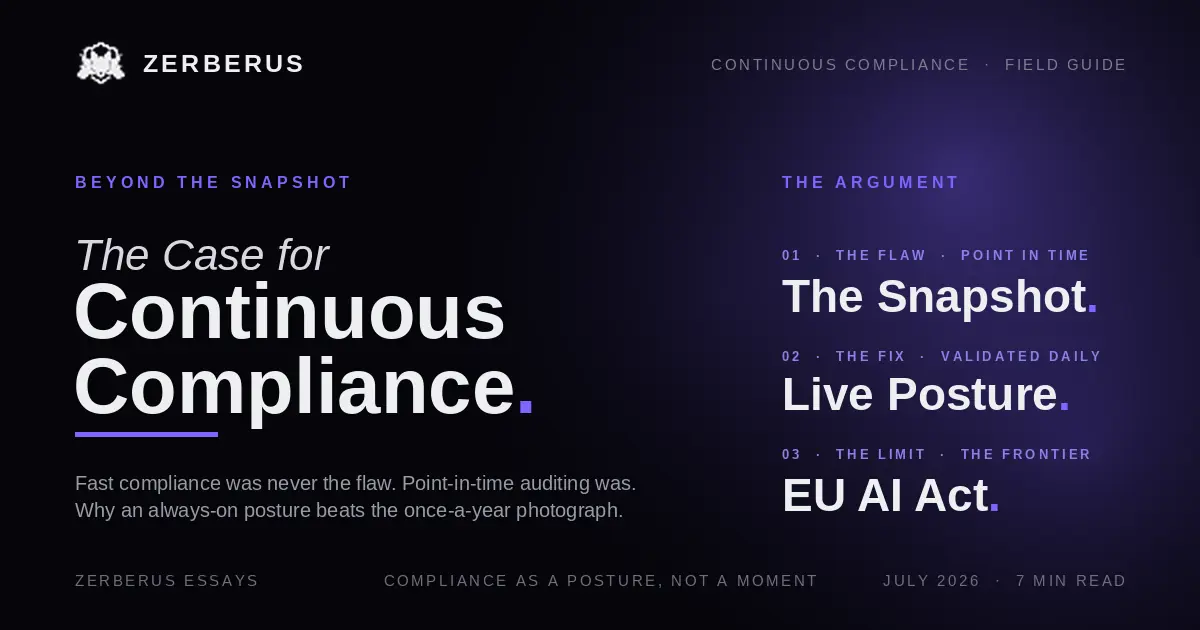
Compliance Is Not a Snapshot: The Case for Continuous Compliance
6 min read
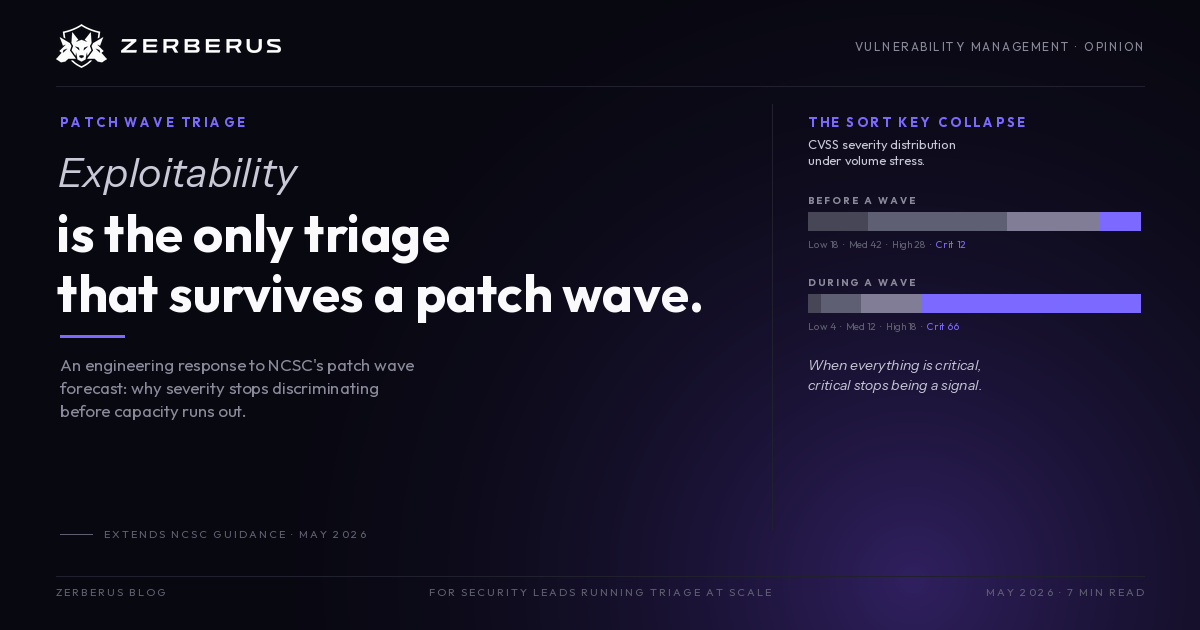
Exploitability is the only triage that survives a patch wave
8 min read
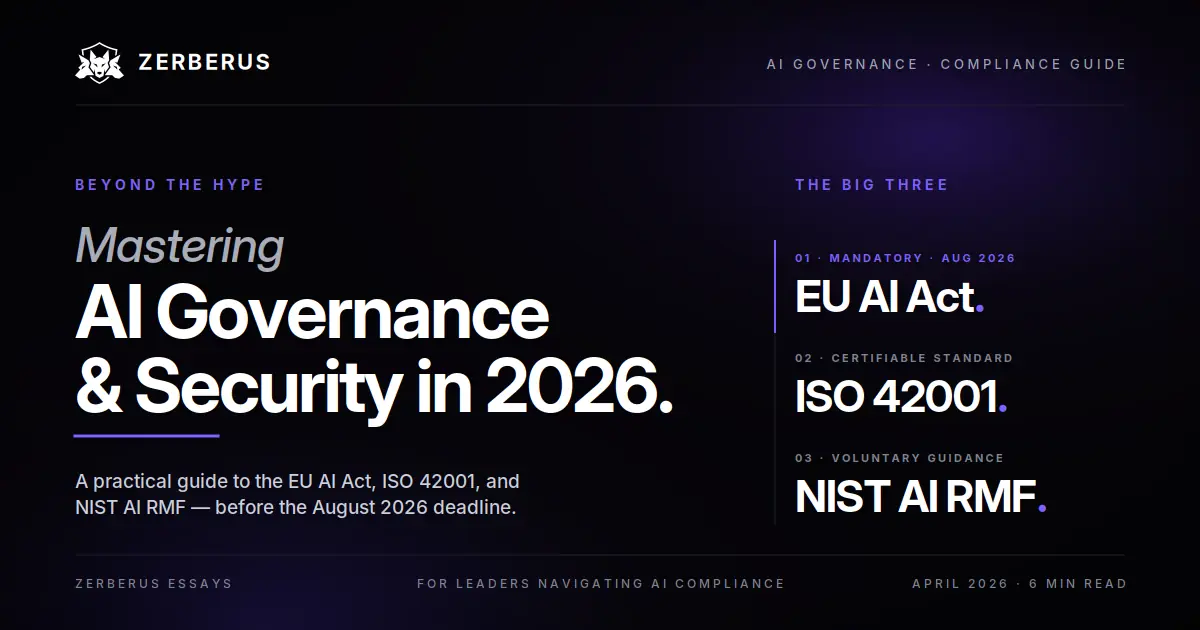
Beyond the Hype: Mastering AI Governance and Security in 2026
4 min read
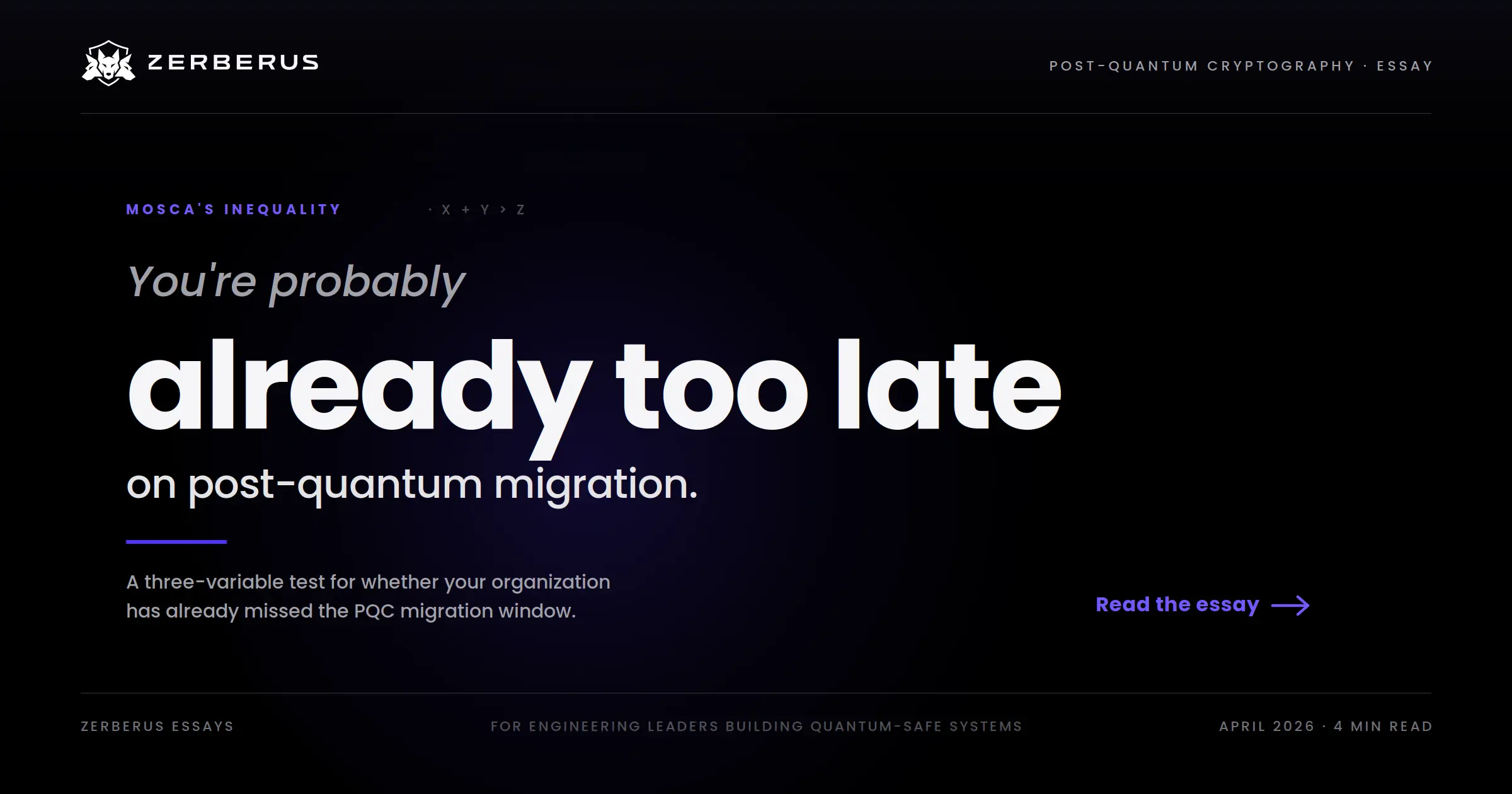
Mosca's Inequality: The Formula That Tells You If You're Already Too Late on Post-Quantum Migration
5 min read
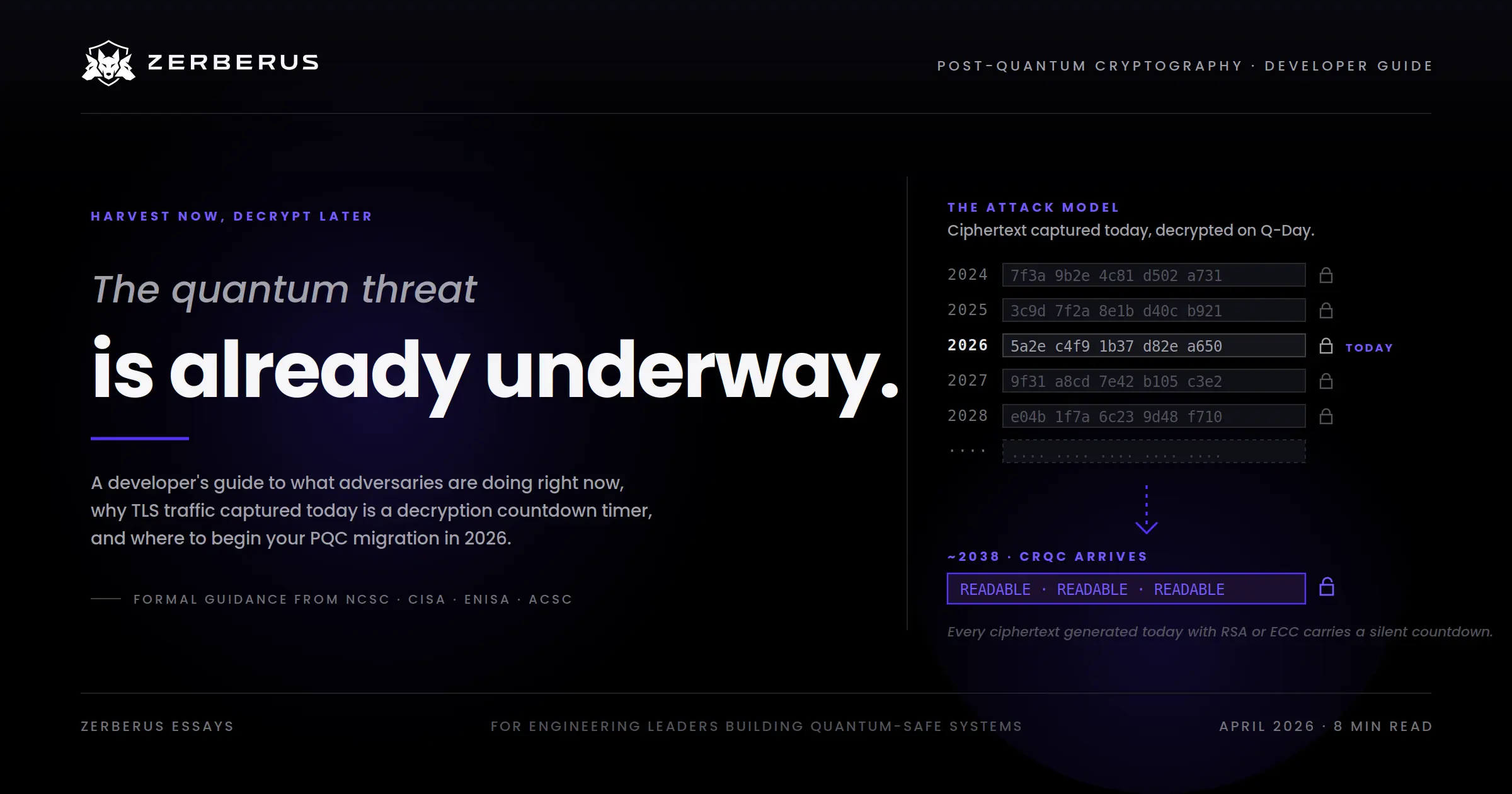
Harvest Now, Decrypt Later (HNDL): A Developer's Guide to the Quantum Threat Already Underway
11 min read
The 2026 Cryptographic Cliff: Why Your Codebase Needs an Audit-Ready CBOM Today
4 min read
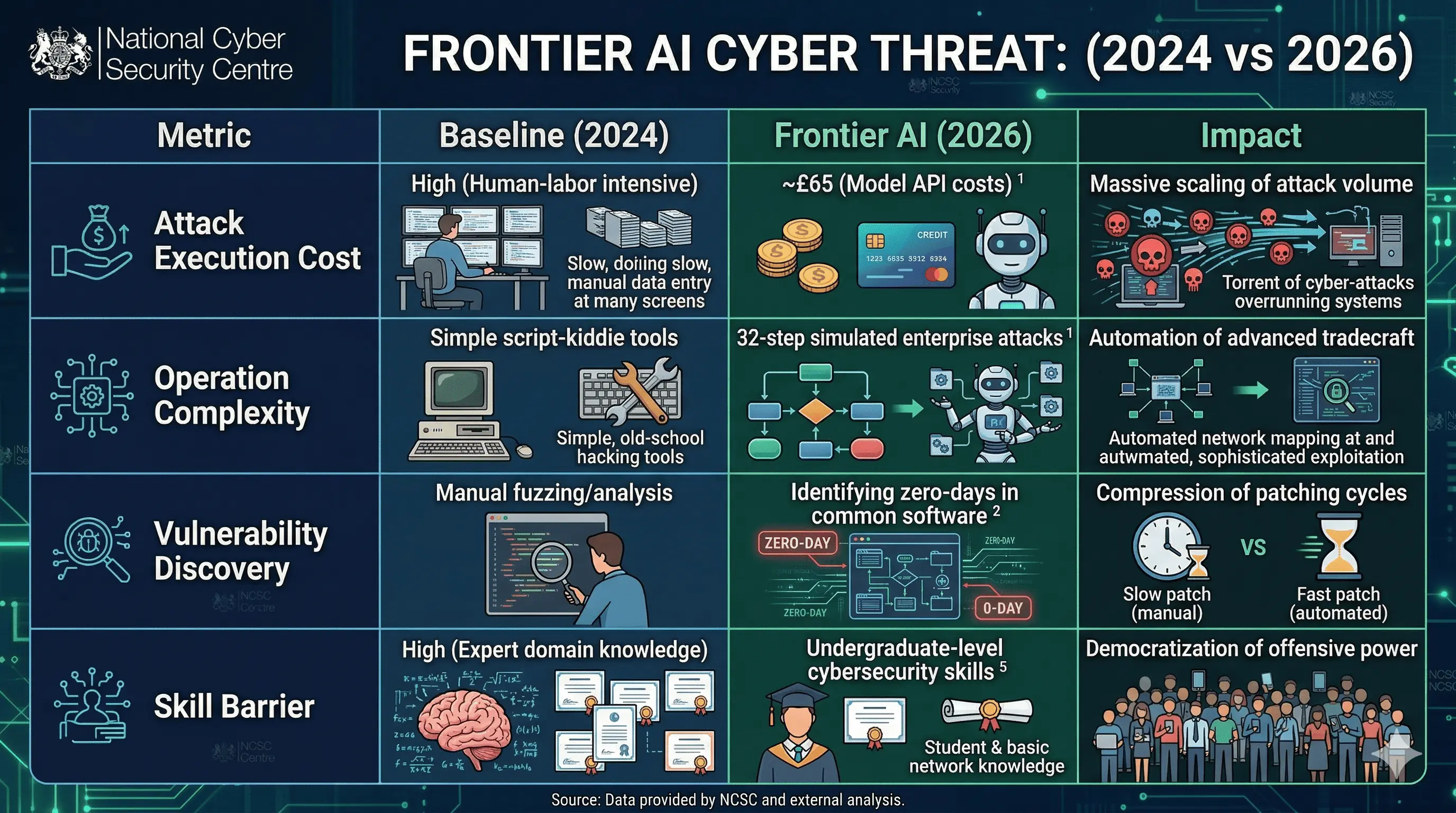
NCSC 2026 AI Guidelines: Is Your Enterprise Prepared for the £65 Breach?
3 min read
Analyzing the Axios Supply Chain Compromise and Its Impact on Infrastructure Trust and JavaScript Ecosystems
4 min read
Is Fast Compliance Compromising Security and Trust in the SaaS Industry
3 min read
How AI Startups Can Safeguard Their Workflows with VANGUARD and Enjoy a Free Trial
3 min read
General
The Ghost in the Machine: Why Your IDE’s Recommendations Are the Next Supply Chain Attack Surface
5 min read
Conducting a Comprehensive Vulnerability Assessment Process
4 min read
The Persistence Problem: Why Agentic AI Demands a New Security Paradigm
4 min read
6 Best Compliance Tools in the UK for 2026: Your Complete Guide
6 min read
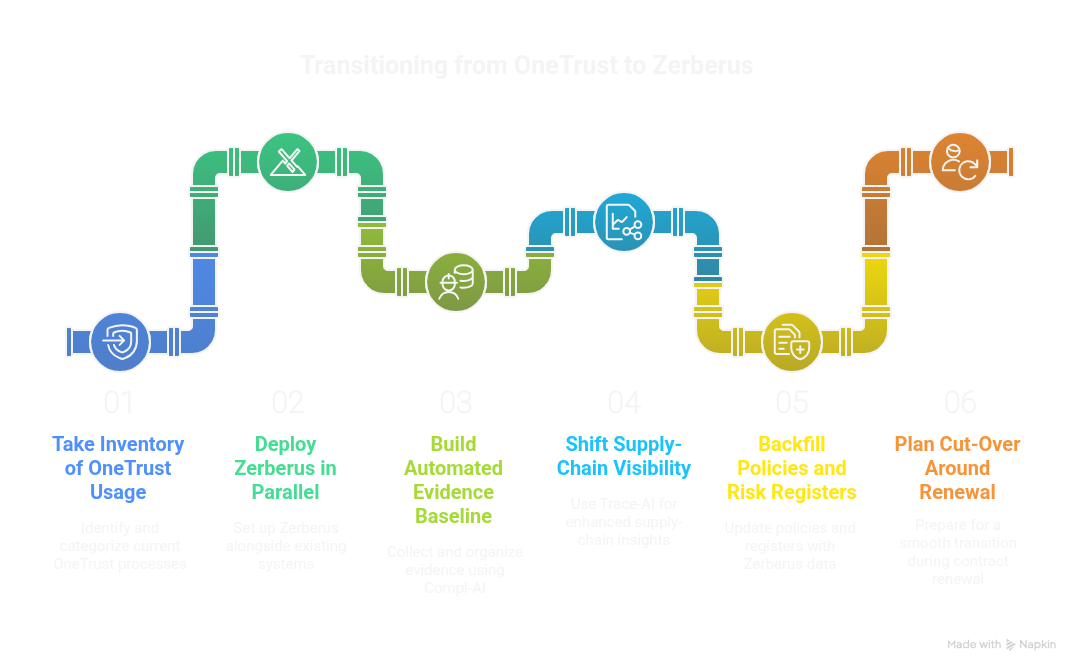
OneTrust Sale Rumours: Have Smart Teams Already Planning Their Switch
6 min read
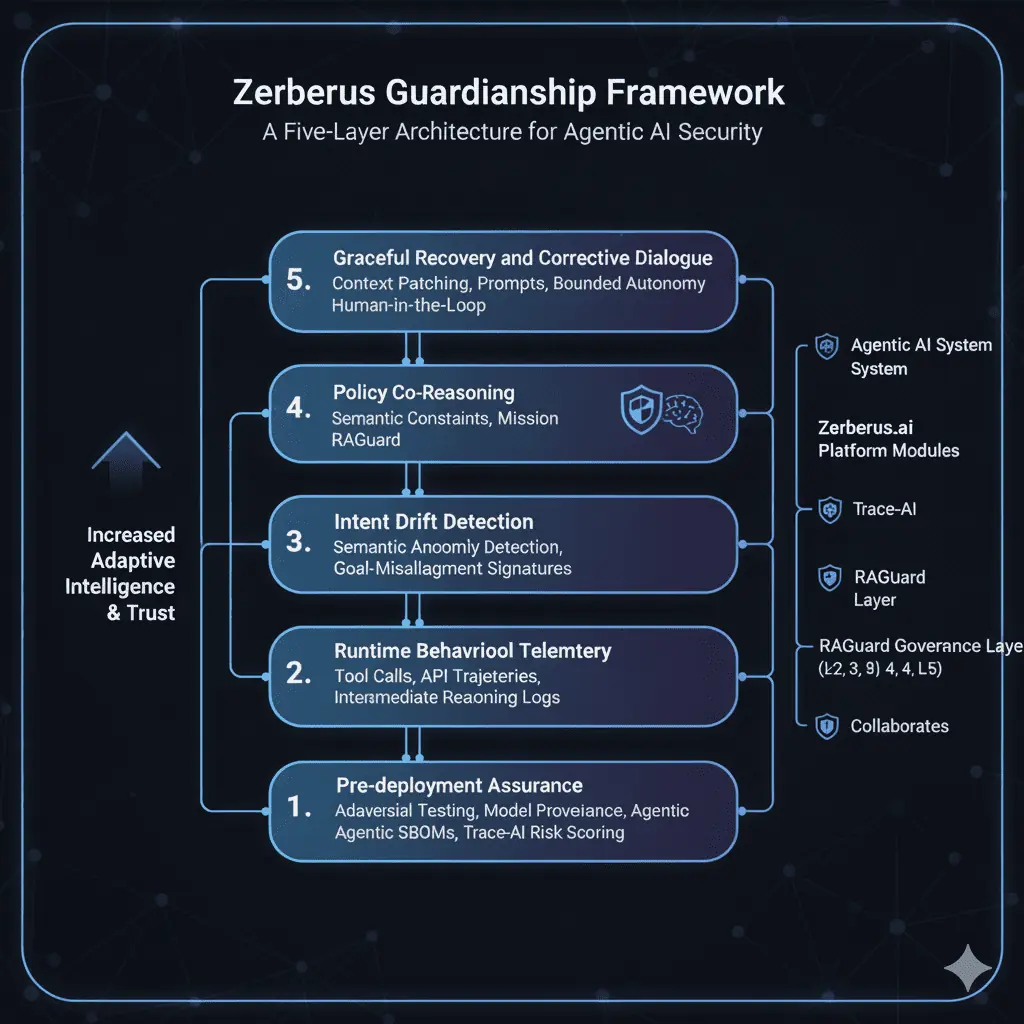
Transitioning to Guardianship in AI Security: A New Era of Assurance
6 min read
EU Cyber Resilience Act (CRA) Compliance Guide: Part II
5 min read
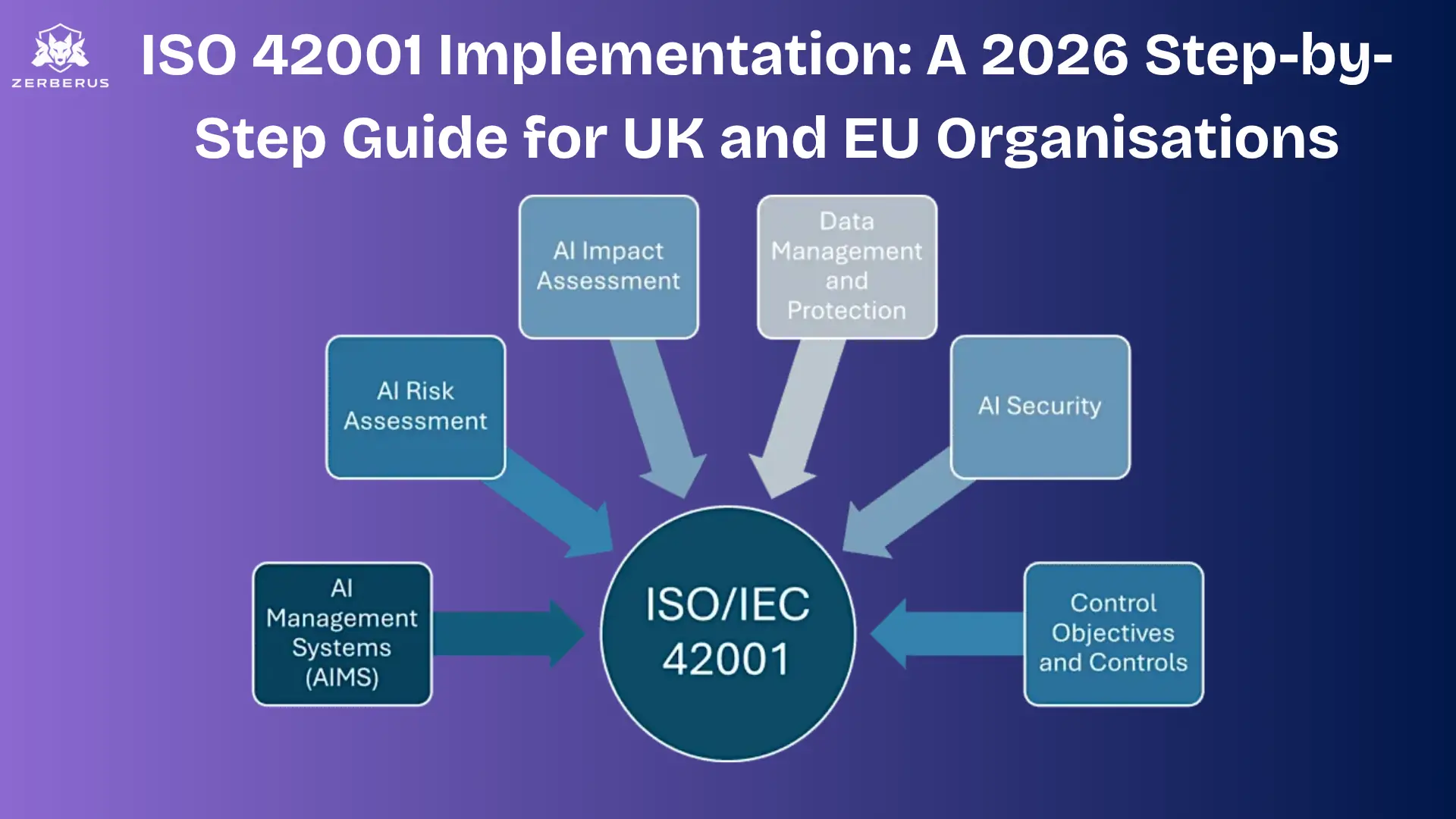
ISO 42001 Implementation: A 2026 Step-by-Step Guide for UK and EU Organisations
13 min read
Decoding the EU Cyber Resilience Act (CRA) : Part 1
5 min read
ISO 42001 for SaaS Startups: How to Build Trust, Win Deals, and Stay Ahead in the AI Governance Era
6 min read
Resilient by Design: Why Zerberus Survives What Brought AWS Down
7 min read
An AI Compliance Platform with SBOM and Supply Chain Security Features: The Trace-AI Metadata Model
5 min read
Complete Guide to Security Questionnaire Automation in 2025
7 min read
How to Automate EU Cyber Resilience Act Compliance in Your CI/CD
6 min read
Supply chain security
From SBOM to ZSBOM: Why Metadata-First Risk Classification Matters
5 min read
25 Questions To Ask While Choosing A Cybersecurity Vendor
7 min read
How to Prepare for a PCI DSS Audit in 7 Steps in 2025
5 min read
Common ISO 27001 Implementation Mistakes and How to Avoid Them
5 min read
Go From CVE to Contract in 60 Seconds
4 min read
Compliance Automation: A Game Changer for SaaS Founders
3 min read
The True Cost of Data Breaches: Why Small Businesses Are at Risk
5 min read
5 Best GRC Software Solutions for 2025
10 min read
How to Choose the Right GRC Solution: A Complete Guide for 2025
5 min read
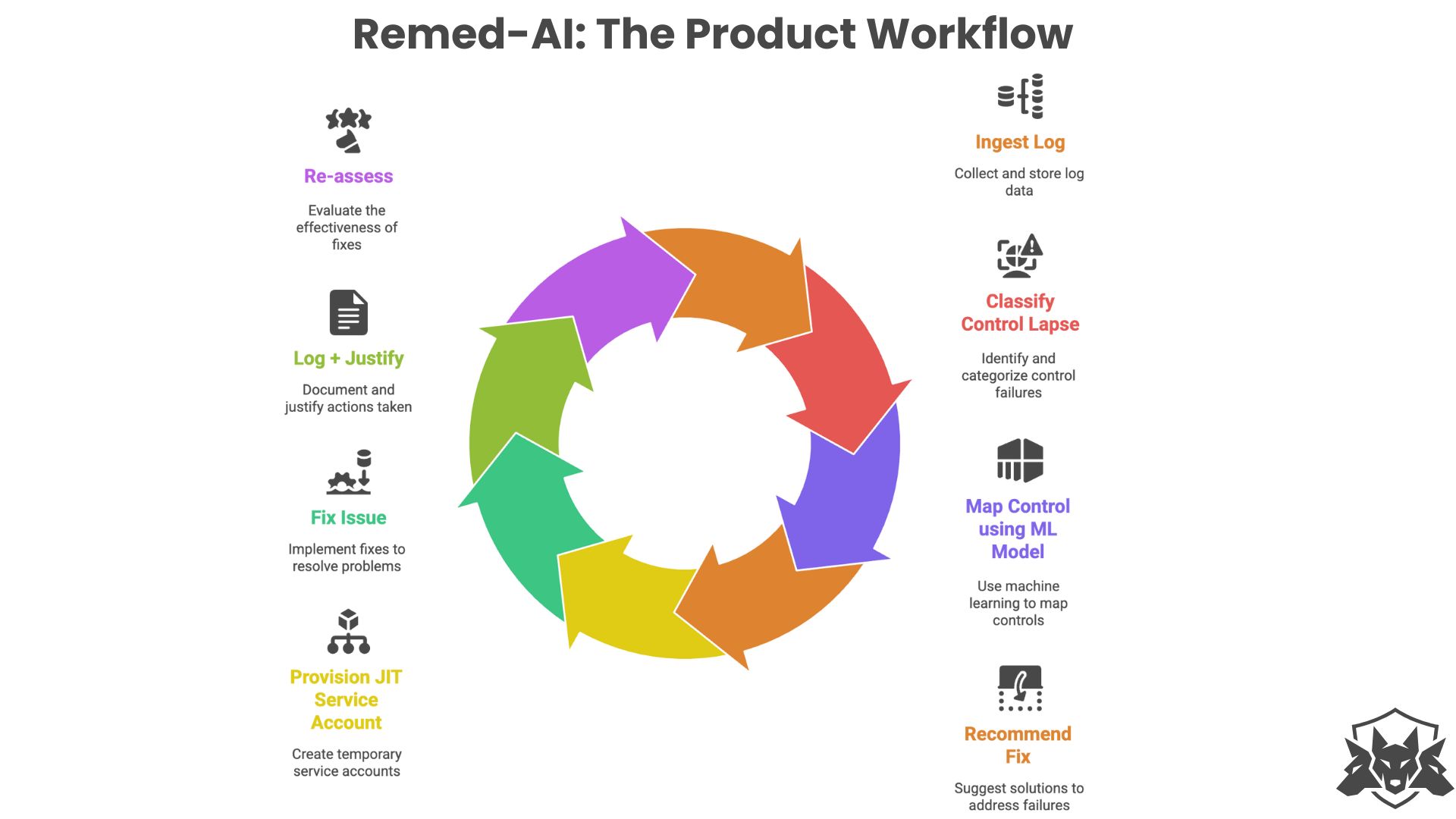
One-Click Risk Remediation: Behind the Scenes of Remed-AI
3 min read
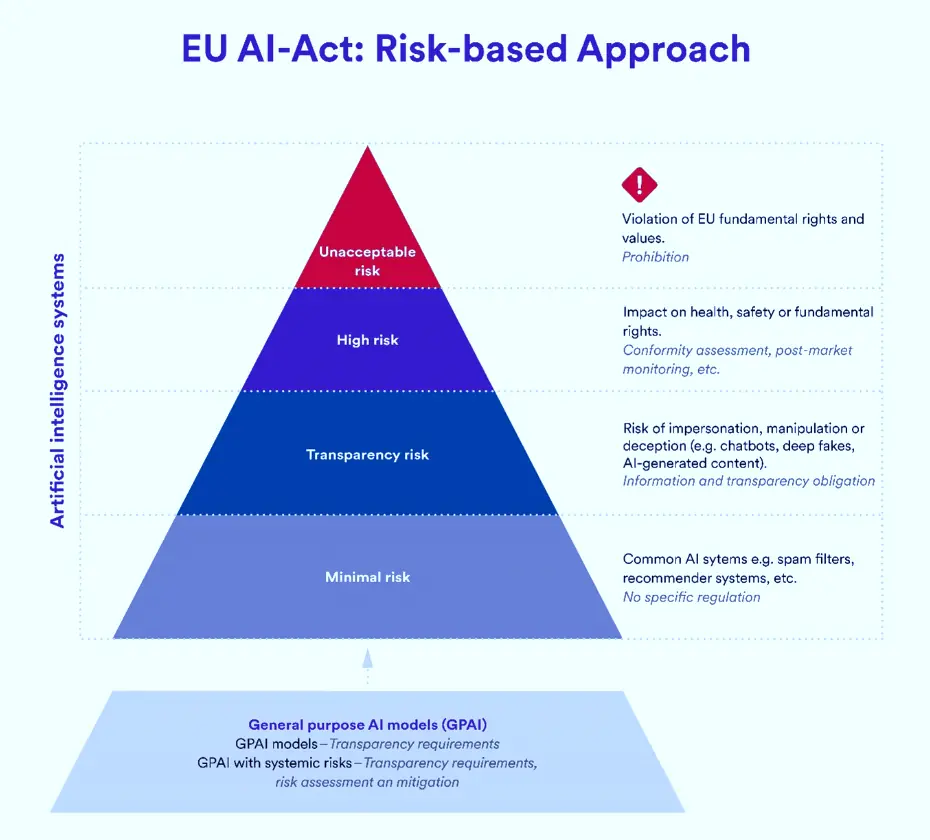
From Risk to Revenue: The SaaS Leader's Playbook for the EU AI Act and ISO 42001
8 min read
Cybersecurity ROI: Measuring Success Beyond Prevented Breaches
7 min read
Essential Features Every Modern Cybersecurity Platform Must Have
5 min read
10 Signs Your Company Needs Better Cybersecurity in 2025
7 min read
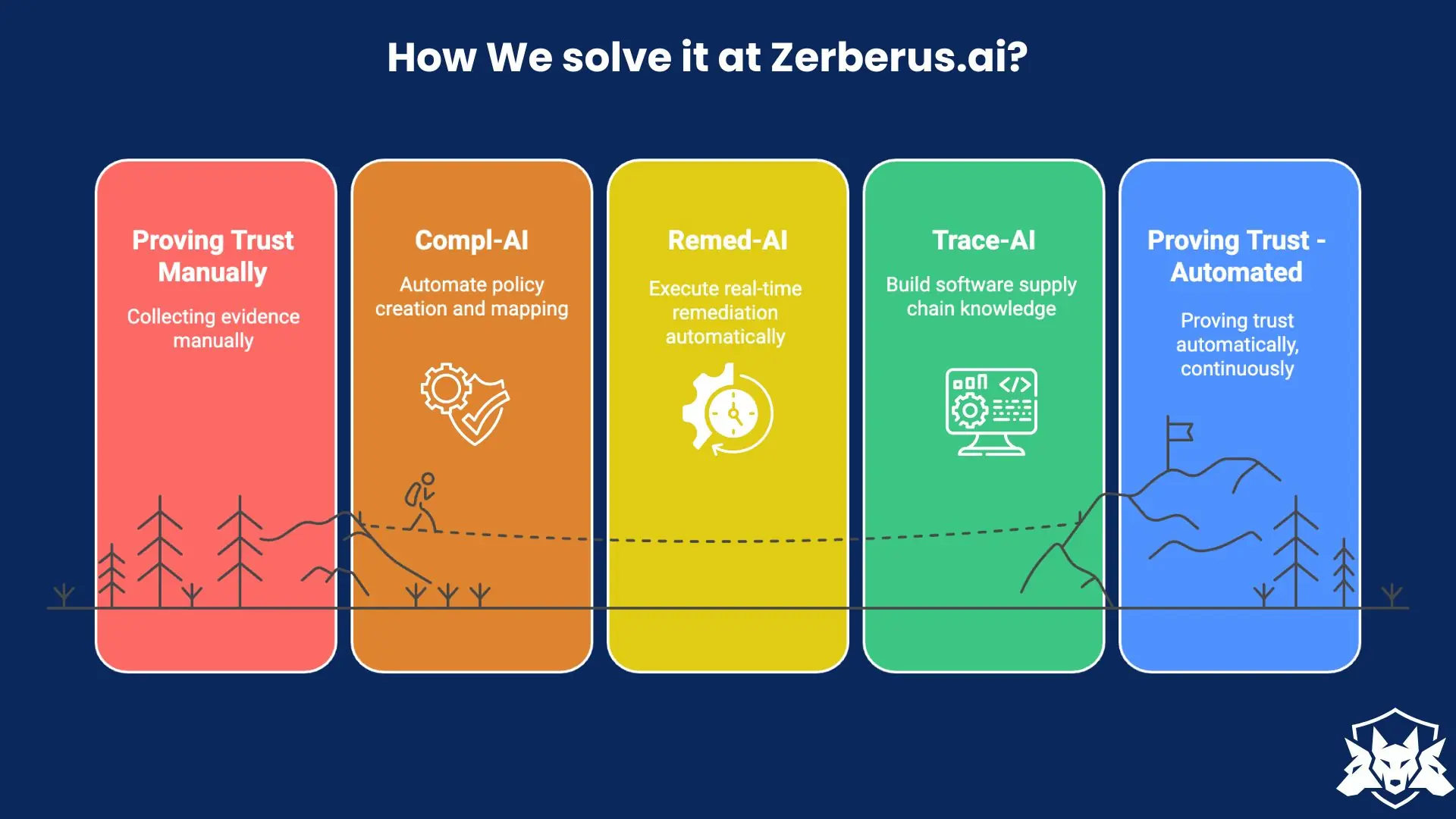
Introducing Compl-AI: Real-Time ISO 27001 Compliance for the Cloud-First Enterprise
3 min read
Why “Startup GRC” Will Fail Without Real-Time Feedback Loops
3 min read
What's New In Zerberus- June 2025
2 min read
SBOM Best Practices for DevOps Teams: Automate Software Supply Chain Security
5 min read
The UK ISO 27001 Certification Guide: Step-by-Step Process, Costs, and Pitfalls
5 min read
ISO 27001 in the UK: What CISOs & CTOs Need to Know Before Getting Certified
4 min read
ISO 27001 Certification Costs: What Most Startups Get Wrong (And How to Fix It)
4 min read
The Future of ISO 27001 Compliance: Embracing Automation for SaaS Companies
4 min read
What UK Retailers Need to Do Now After 2025 Cyber Attacks on Big Names
4 min read
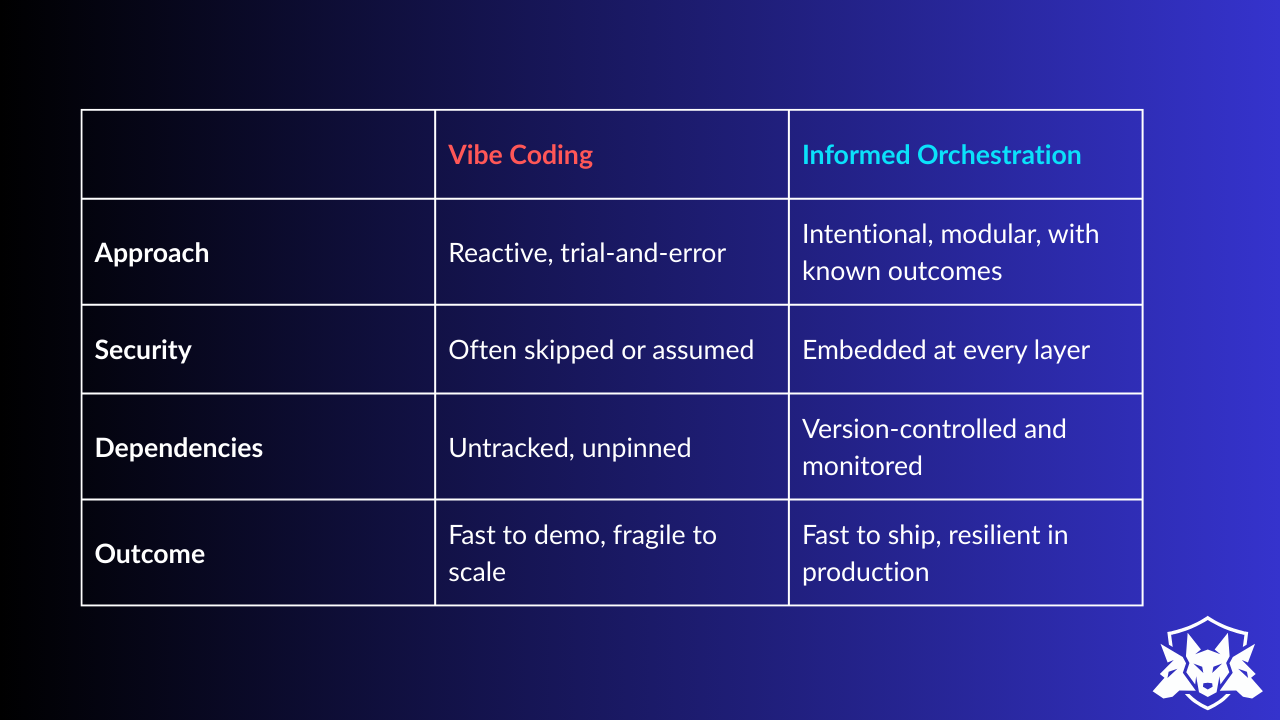
From Prototype to Breach: Rethinking Software Supply Chain Security
4 min read
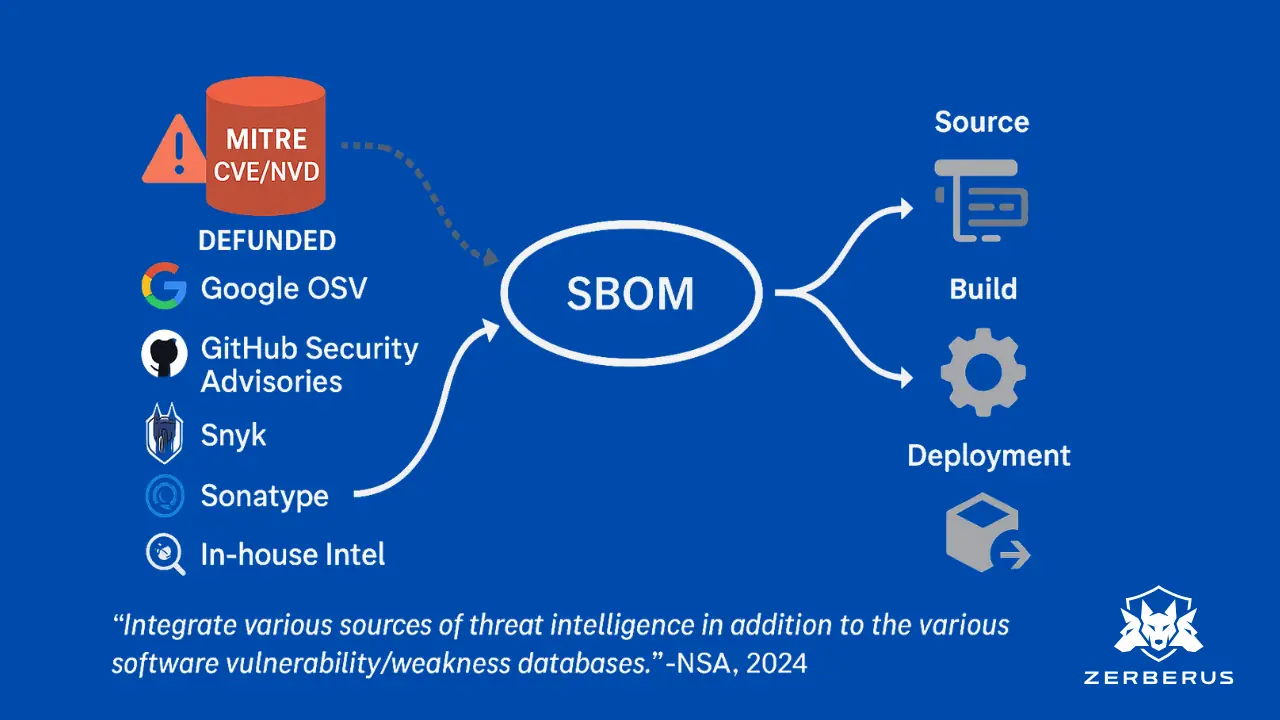
Building a Strong Software Supply Chain After CVE Changes
6 min read
ISO 27001 Is Your Security Core: A Strategic Roadmap for SaaS Startups and SMBs Navigating European Cyber Compliance
4 min read
The UK Cyber Security And Resilience Bill: How To Prep Your Business Now
4 min read
Is Your UK Tech Firm Ready for New EU Rules?
3 min read
How Automating ISO 27001 Reduces Compliance Costs by 50 Percent
5 min read
ISO 27001 Made Easy: A Startup's Quick Guide.
5 min read
Future-Proofing: Preparing for the Rise of AI Regulations
3 min read
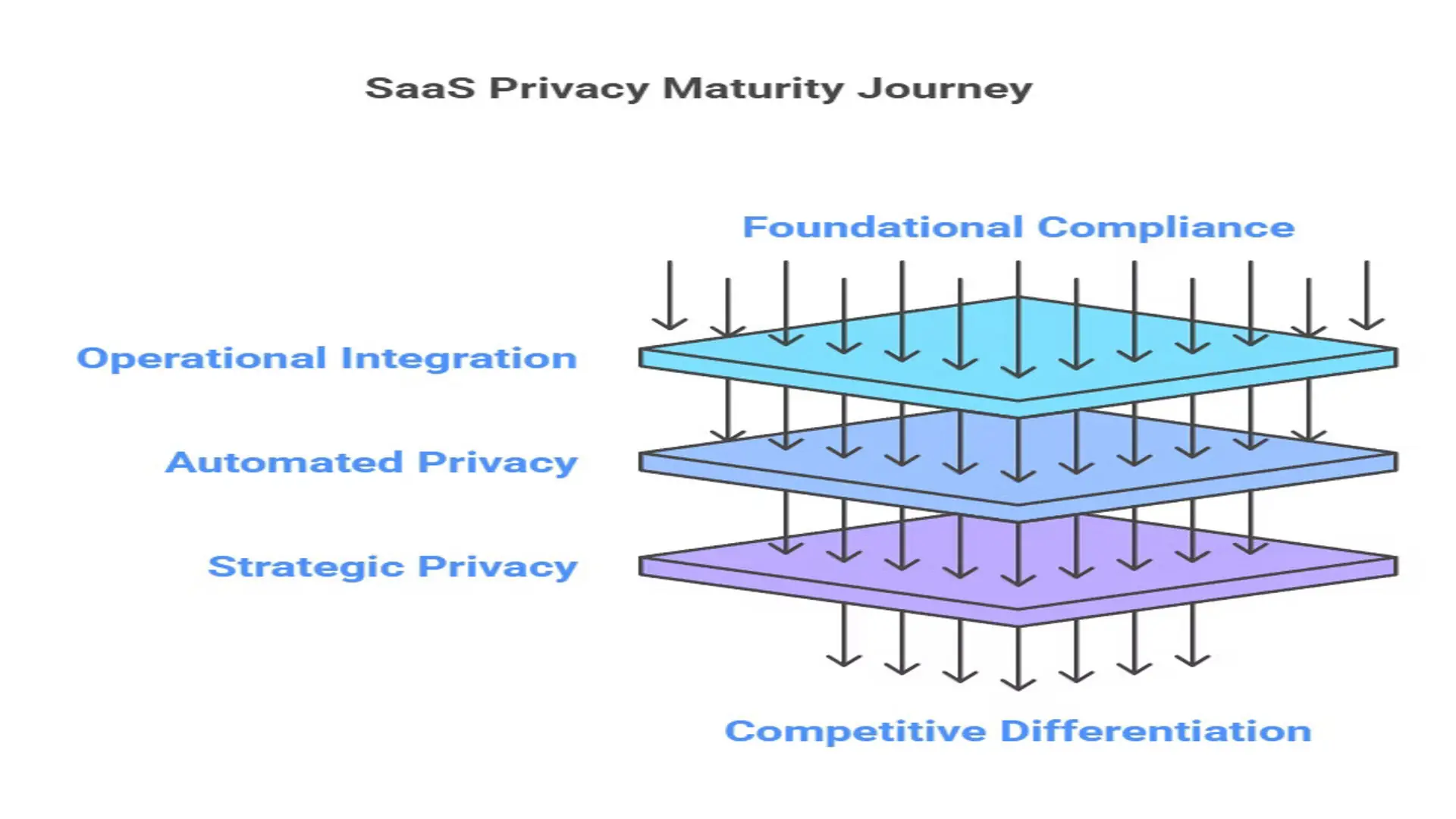
Compliance Matters: Unlocking Revenue Through Privacy Maturity for SaaS Providers
3 min read
Cybersecurity Compliance for Tech Leaders: A CISO And CTO Survival Guide
7 min read
Compliance Matters: Unlocking Revenue Through Security Standards for SaaS Providers
5 min read
Understanding Compliance in Information Security: A Comprehensive Guide
6 min read
No posts in this topic yet.